
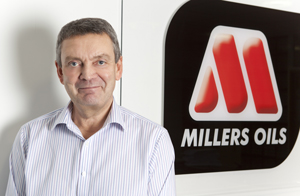
 Millers Oils has issued a warning to the industry that simply lowering the viscosity isn’t enough to meet increasingly stringent emission targets.
It says innovative oil development will help reduce friction which is responsible for 20 percent of the engine’s carbon dioxide emissions.
It’s a challenge the industry as a whole is facing while trying to increase durability.
Martyn Mann, Technical Director at Millers Oils, said: “Compatibility with changing, sensitive emissions technologies, smaller sump capacity, fewer and smaller crank bearings, high specific power output and increased low speed torque loads are just some of the areas that traditional oils struggle to address efficiently.
“The expectation of increased service intervals, hybrid drives and aggressive thermal environments necessitates thorough lubrication development, and manufacturers must resist the temptation of reducing oil viscosity.”
Millers believes that the need to adopt a different approach is down to drivetrain advancements. It says focusing on oil technology is essential not only to help OEMs create reliable downsized engines and alternative powertrains, but to maxmise the potential gains made by these developments.


Go to comments